Case · Design lab · 2026
AI builds what your system is. CHIP sees it first.
01 · The rule
The agent never moves silently.
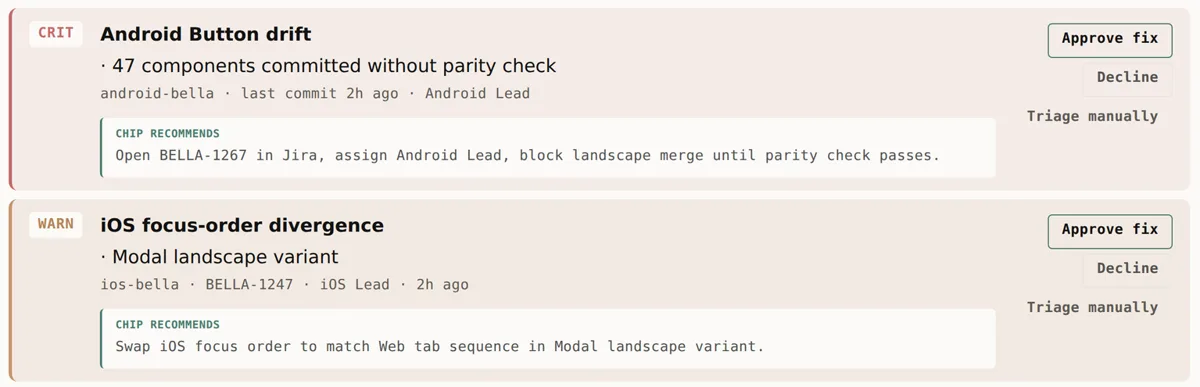
CHIP scans my repos, Figma and Storybook. It catches the drift1, drafts a fix2, and then waits: nothing happens until I approve it3.
An agent reads what you wrote, not what you meant. So the human stays in the judgement layer, and every action is logged.
02 · My own systems
Run it on my systems, not a client's.
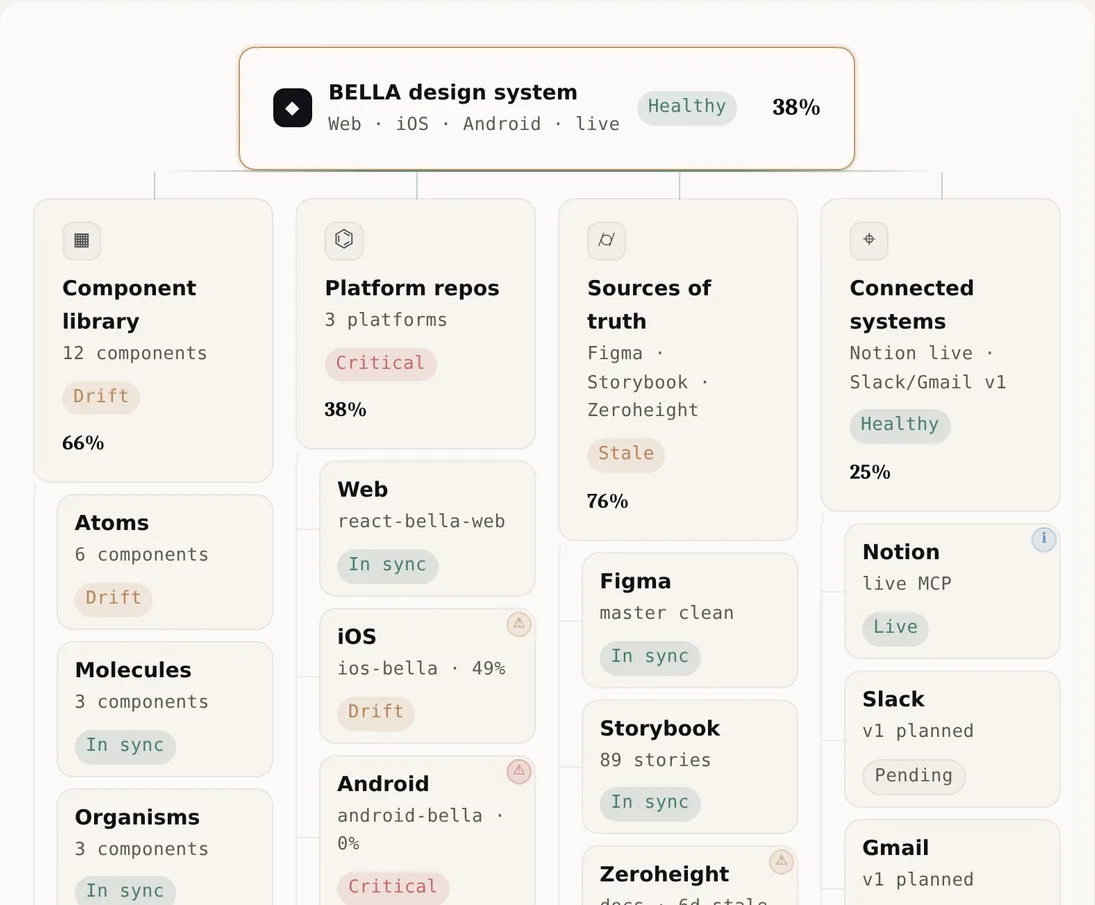
A course chapter treats a design system like a car: a check-engine light and a ten-station inspection. I pointed it at my own design system, portfolio and content engine, and scored each on agent-readiness1.
The map shows where it is critical2 and where it drifts3. NDA-clean, and more honest.
03 · In public
Build it in public, labelled a prototype.
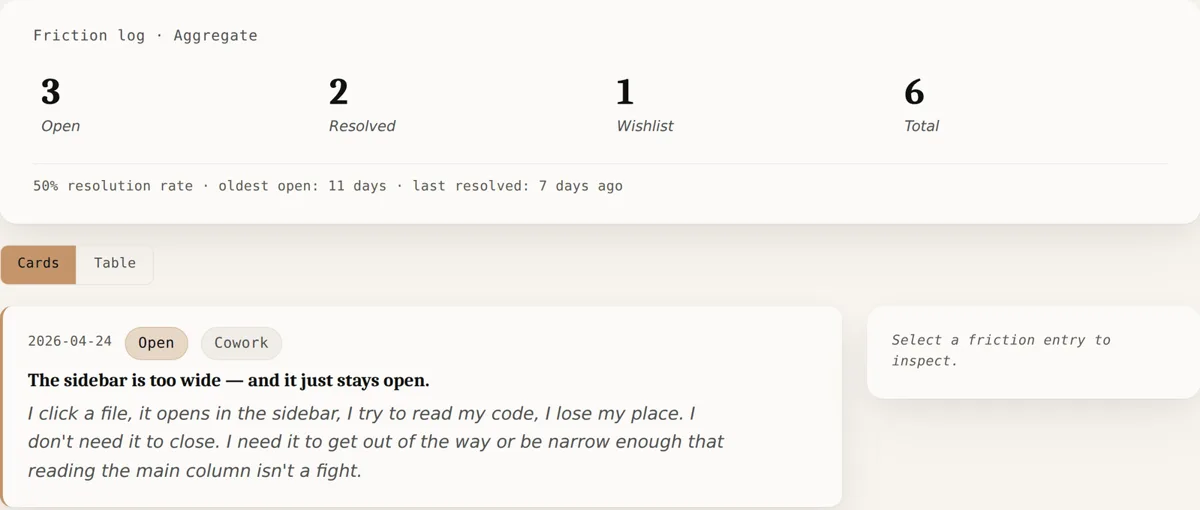
Honesty beats polish. The friction is counted in the open1: what is still open, what is fixed, what is a wish.
And each entry says what broke, in my own words2, so the next version fixes real problems.
What changed
A human in control while the machine moves fast.
The hard part is not the tokens. That is the work I want to do with a team: design-system rigour, plus the guardrails that let AI move fast without losing the human call.
Credit: the AI and design systems course by Brad Frost, Ian Frost and TJ Pitre.